

How to Store Coffee Beans for Maximum Freshness
Table of Contents
- Why Coffee Beans Go Stale: The Four Enemies
- How Long Does Coffee Stay Fresh After Roasting?
- The Best Coffee Storage Containers: What to Look For
- Step-by-Step: How to Store Coffee Beans for Maximum Freshness
- Freezing Coffee Beans: When It Works and When It Hurts
- Storing Coffee for Travel and Different Climates
- Signs Your Coffee Beans Have Gone Stale
- Conclusion: Build a Freshness Routine That Works
- Frequently Asked Questions
Last Updated: September 7, 2026
The question of how to store coffee beans for maximum freshness is the difference between a cup that tastes vibrant and alive versus one that tastes flat and dusty. Most coffee drinkers unknowingly ruin their beans within days of opening the bag, not through any dramatic mistake, but through small, cumulative errors in storage. At Bright N Early, we roast every order specifically to preserve those delicate aromatic compounds, so we have a vested interest in helping you keep them intact once they reach your kitchen.
Coffee bean storage is fundamentally a race against time and the elements. The specialty coffee industry has spent decades refining packaging and roasting technology, yet the moment you open that bag, the clock starts ticking faster. Below, we'll walk through the exact steps to protect your investment, the science behind why beans degrade, and the specific containers and habits that make a measurable difference. We'll also cover when freezing helps, how to handle travel, and the unmistakable signs that your beans have already passed their peak.
Why Coffee Beans Go Stale: The Four Enemies
Coffee staleness is not a single event but the result of four environmental forces working against the bean: air, light, heat, and moisture. Each one attacks different components of the coffee, and together they can destroy a batch's flavor profile in a matter of days if left unchecked.
Air is the primary culprit because it drives oxidation. When roasted coffee is exposed to oxygen, the volatile oils and aromatic compounds that carry flavor begin to break down. This process is why a one-way valve on a quality coffee bag is so important: it lets carbon dioxide escape without letting oxygen back in. Light accelerates these same chemical reactions, which is why opaque, airtight containers outperform clear glass jars on a sunny counter. Heat speeds up every chemical reaction, including rancidity, so the warm spot above your stove is one of the worst possible homes for beans. Moisture, finally, triggers the staling process and can lead to mold growth in extreme cases.
The practical takeaway is that a cool, dark, dry, and sealed environment is non-negotiable. Many people treat their coffee bag like a pantry staple, but it behaves more like a perishable spice with a very short window of excellence.
How Long Does Coffee Stay Fresh After Roasting?
Whole bean coffee maintains its peak freshness for roughly two to four weeks after the roast date, provided it is stored properly (ncausa.org). This window is when the flavor profile is at its most complex and aromatic. Pre-ground coffee, by contrast, loses its vibrancy in a matter of days because grinding dramatically increases the surface area exposed to oxygen.
The roast date, not the "best by" date, is the number that matters. A bag roasted last week is still in its prime; a bag roasted three months ago has already lost most of its volatile oils regardless of how well it was sealed. This is why buying from a roaster that prints the roast date on the bag, and that roasts to order, makes such a practical difference. National Coffee Association freshness guidelines emphasize that coffee is a perishable product and recommend consuming it within weeks of roasting for the best cup.
The degradation curve is not linear. The first few days after roasting, the beans are actually still degassing carbon dioxide, which is why they can taste slightly sharp. The sweet spot usually arrives around day four or five and extends for a couple of weeks. After that, the decline becomes noticeable, first in lost aroma and then in a flat, papery taste.
The Best Coffee Storage Containers: What to Look For
The ideal coffee storage container is airtight, opaque, and sized to hold only the beans you will use within a week or two. Air is the enemy, so any container with a loose-fitting lid or a rubber seal that fails over time will let your beans go stale faster than keeping them in the original bag.
Material science matters more than most guides acknowledge. Ceramic and tinted glass options work well because they block light and do not impart flavors, but they are fragile and often have imperfect seals. Stainless steel containers with a vacuum seal mechanism are the gold standard for countertop storage because they combine opacity, durability, and a truly airtight closure. Clear glass jars, while popular for their aesthetic appeal, expose beans to light and should be kept inside a cabinet rather than on an open shelf.
| Container Type | Light Protection | Airtight Seal | Best For |
|---|---|---|---|
| Original resealable bag | Good (if opaque) | Good with one-way valve | Short-term, first 1-2 weeks |
| Ceramic canister | Excellent | Varies by lid quality | Countertop display |
| Stainless steel vacuum | Excellent | Excellent | Long-term countertop storage |
| Clear glass jar | Poor | Good | Cabinet storage only |
The best coffee storage containers also account for headspace. A half-empty container means more air inside, accelerating oxidation. If you buy in bulk, portion beans into smaller containers so each one stays as full as possible until opened.
Step-by-Step: How to Store Coffee Beans for Maximum Freshness
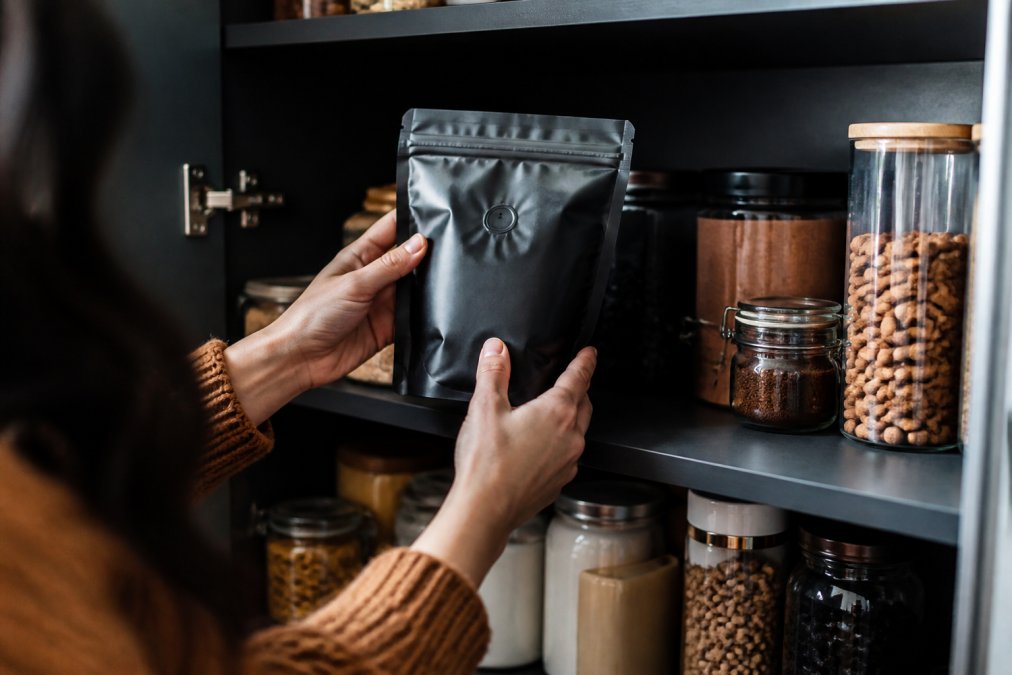
The storage method that delivers the most consistent results combines three habits: keeping beans in their original bag, finding the right spot, and buying in quantities you will actually use. Each step reinforces the others, and skipping any one of them shortens your freshness window.
Step 1: Keep Beans in Their Original Bag
The original bag from a quality roaster is often the best storage vessel available. These bags are designed with a one-way degassing valve that releases carbon dioxide while preventing oxygen from entering. Transferring beans to a different container usually introduces more air and exposes them to light, undoing the roaster's careful packaging work.
If the bag has a resealable strip, press out as much air as possible before sealing it after each use. If it does not, fold the top down several times and secure it with a clip. The goal is to minimize the volume of air trapped inside. This approach works so well that many coffee professionals never transfer their beans at all.
Step 2: Find a Cool, Dark Spot
Once sealed, the bag needs a home that avoids the four enemies. A pantry cabinet away from the stove, oven, or dishwasher is ideal. Countertops near a window or under direct sunlight are poor choices because light and heat both accelerate staling. Temperature fluctuations are also damaging, so avoid storing coffee above appliances that cycle on and off.
A cool and dry environment between 60 and 75 degrees Fahrenheit works well for most homes. If your kitchen runs warm, a cabinet on an exterior wall will stay cooler than one near the range. The key is consistency: beans stored at a stable temperature will retain their aromatic compounds far longer than those subjected to daily swings.
Step 3: Buy in Small Batches
The most effective freshness strategy is to buy only what you will consume within two to three weeks. This may feel counterintuitive when larger bags offer better value per ounce, but stale coffee is wasted money no matter the unit price. A smaller batch that you finish at peak freshness delivers a better cup than a larger batch that goes flat halfway through.
This is where a subscription model earns its keep. Roasters that ship freshly roasted coffee on a schedule, like the service we offer at Bright N Early, ensure you always have beans within their freshness window without the risk of overbuying. You control the cadence, so you never end up with a pile of bags you cannot get through.
Freezing Coffee Beans: When It Works and When It Hurts
Freezing coffee beans is a divisive topic, and the truth is that it works only under specific conditions. Freezing can extend the shelf life of beans for several months, but it introduces two serious risks: moisture and odor absorption. Coffee beans are porous and will absorb surrounding flavors, so a freezer full of leftover food can ruin a batch quickly.
If you choose to freeze, the correct method is to portion beans into small, airtight, vacuum-sealed bags before freezing. Take out only what you need for the next few days, and never refreeze beans that have thawed. The condensation that forms when frozen beans hit warm air is the primary cause of flavor loss, so beans should be removed and allowed to reach room temperature while still sealed in their bag.
For most home drinkers, freezing is unnecessary. If you are consuming beans within a month of the roast date, proper countertop or pantry storage will preserve them adequately. Freezing is best reserved for those who buy in large quantities or who want to save a special batch for later. Specialty Coffee Association storage research has explored the impact of freezing on bean quality, and the consensus supports freezing only with proper airtight, portioned packaging.
Storing Coffee for Travel and Different Climates
Travel and high-humidity environments present unique storage challenges that standard advice does not address. When you are on the road, the biggest threat is not staleness but exposure to foreign odors and fluctuating temperatures in luggage or car trunks. A small, airtight travel container made of stainless steel or food-grade plastic will protect beans from both crushing and odor contamination.
In humid climates, moisture becomes the dominant enemy. Beans left in a warm, damp kitchen can absorb enough humidity to degrade noticeably within days. If you live in a coastal or subtropical region, keep beans in an airtight container inside a climate-controlled space, and consider using a desiccant pack in the storage area to manage ambient humidity. The science of CO2 degassing also shifts with temperature, so beans stored in warmer conditions will lose their carbon dioxide more quickly, accelerating the staling process.
For camping trips or extended travel, pre-portion your daily dose into small, individual vacuum-sealed pouches. This prevents you from exposing the entire batch to air each morning and keeps the remaining beans fresh for the duration of your trip.
Signs Your Coffee Beans Have Gone Stale
Stale coffee beans announce themselves through smell, appearance, and taste. The most reliable indicator is aroma: fresh beans have a rich, fragrant smell that fills the room when you open the bag. Stale beans smell flat, musty, or faintly like cardboard. If you cannot detect much of an aroma at all, the volatile oils have already oxidized.
Visually, fresh beans have a slight sheen from the oils on their surface. As beans age, this sheen dulls and the beans take on a dry, matte appearance. This is particularly noticeable with darker roasts, which show oil on the surface within days of roasting. The absence of that oil, or a greasy, sticky film accompanied by an off smell, signals that the beans are past their prime.
The taste test is definitive. Stale coffee brews flat, with muted flavors and little to no sweetness or acidity. The complex flavor notes you could detect in a fresh cup, whether fruity, chocolatey, or floral, will be barely present. If your morning cup tastes like hot brown water, your storage method needs an overhaul.
Conclusion: Build a Freshness Routine That Works
Storing coffee beans correctly is not complicated, but it requires consistency. Keep beans in their original resealable bag with the air pressed out, store that bag in a cool, dark cabinet away from heat and moisture, and buy in small batches that you will finish within two to three weeks of the roast date. Reserve freezing for special circumstances, and treat travel and humid climates as separate cases that demand extra care.
The payoff for this routine is a cup that tastes the way the roaster intended, with all the aromatic compounds and flavor complexity intact. At Bright N Early, we roast every order to preserve that peak freshness, and we want you to enjoy it fully. Shop our fresh-roasted coffee and experience the difference that proper storage, and proper roasting, makes in every cup.
Frequently Asked Questions
Is it okay to store coffee beans in a Ziploc bag?
A Ziploc bag works for a day or two, but it is not a good long-term solution. These bags are not truly airtight and they let light in, which speeds up staling. If you must use one, squeeze out as much air as possible before sealing and keep the bag in a dark cabinet. For anything beyond a few days, transfer your beans to an airtight, opaque container with a one-way valve to let carbon dioxide escape without letting oxygen in.
Should you store coffee beans in the freezer or pantry?
For daily use, the pantry is almost always the right choice. Freezing exposes beans to moisture and temperature swings every time you open the bag, which causes condensation and degrades flavor. Freezing only makes sense for long-term storage of beans you will not touch for several weeks. If you do freeze, portion beans into small, airtight containers so you only remove what you need at one time.
Do coffee beans go bad after 2 years?
Coffee beans do not spoil in a way that makes you sick, but they lose most of their flavor long before two years pass. Roasted coffee is best within 4 to 6 weeks of the roast date. After that, the aromatic compounds that create flavor fade and oxidation sets in, leaving beans tasting flat, papery, or sour. Beans that are two years old will brew a cup that is technically drinkable but far from the flavor profile the roaster intended.
What is the 15-15-15 rule for coffee?
The 15-15-15 rule is a freshness guideline some roasters share. It suggests coffee beans are at their best for about 15 days after roasting, ground coffee peaks about 15 minutes after grinding, and brewed coffee should be consumed within 15 minutes of brewing. While the exact numbers vary by roaster, the principle holds: roasted whole beans hold flavor longest, ground coffee loses aroma quickly, and brewed coffee fades fast.
The challenge with coffee storage is that the habits are simple, but the discipline is not. Bright N Early removes half the battle by roasting to order and shipping quickly, so your beans arrive at their peak. Combine that with the storage steps above, and you have a reliable path to a consistently excellent cup. Get started with Bright N Early and taste what fresh-roasted coffee, properly stored, really has to offer.